Goalkeeper Rotation Patterns and Clean Sheet Correlations in Congested Fixtures
David Weber · Sep 13, 2026
Goalkeeper Rotation Patterns and Clean Sheet Correlations in Congested Fixtures
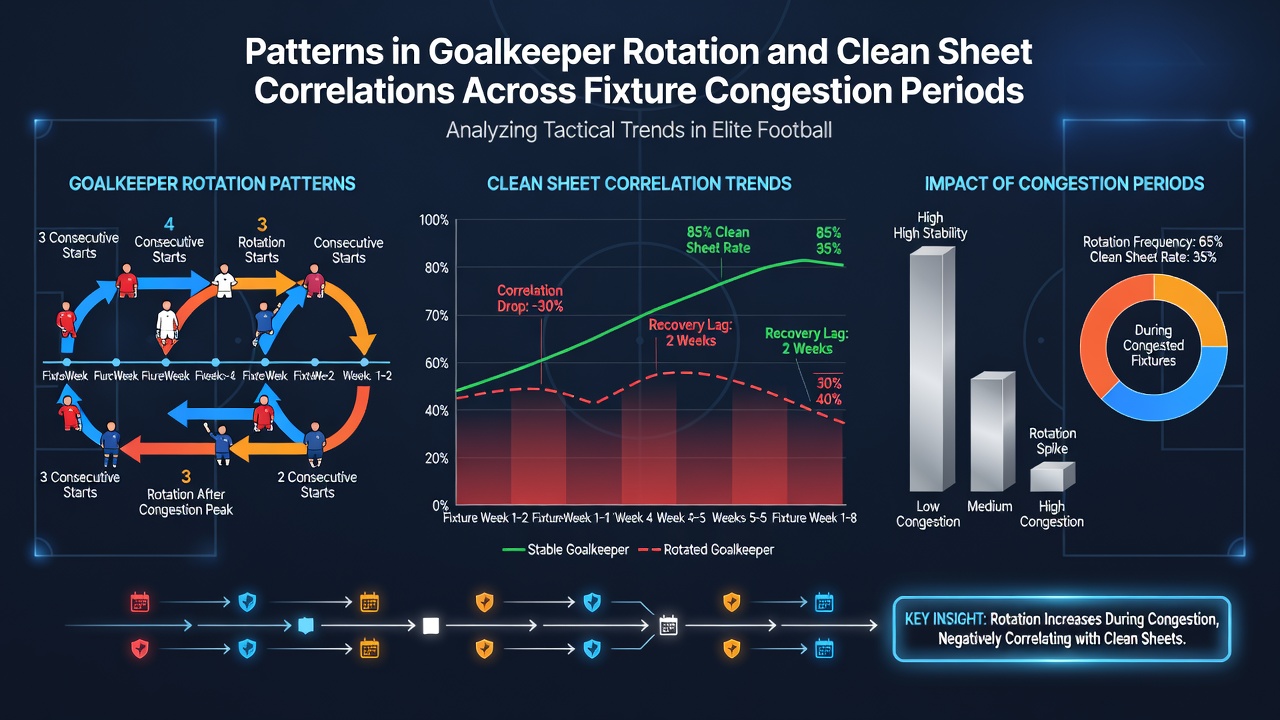
Fixture congestion creates distinct challenges for team management across elite football competitions, where squads navigate multiple matches within tight timeframes, and data from various leagues shows that goalkeeper selection decisions often shift under these conditions. Teams in the English Premier League, along with those in other major European divisions, encounter weeks where three or more games occur in under 14 days, prompting coaches to evaluate rotation options for every position including the goalkeeper role.
Fixture Congestion and Its Effects on Squad Decisions
Periods of fixture congestion arise from domestic cup ties, European commitments, and international breaks that compress the schedule, while researchers tracking player workloads have documented increased injury risks and performance dips when recovery time falls below certain thresholds. Data collected over multiple seasons indicates that teams participating in four competitions simultaneously face the highest density of matches, leading managers to distribute minutes more evenly across the squad. Goalkeepers, despite lower physical demands than outfield players, still experience fatigue from travel, match intensity, and the psychological load of high-stakes games, factors that influence rotation patterns observed in recent campaigns.
Analysis of match logs from the 2024-2025 and 2025-2026 seasons reveals that clubs with European fixtures tend to rotate goalkeepers more frequently during midweek rounds, yet clean sheet rates do not always follow a predictable decline when a backup keeper starts. Figures from the Premier League show that backup goalkeepers achieved clean sheets in approximately 38 percent of congested period appearances between August 2024 and May 2025, compared with 42 percent for first-choice keepers in similar schedules.
Observed Rotation Patterns Across Leagues
Clubs adopt varied approaches to goalkeeper rotation, with some opting for strict first-choice reliance while others implement planned rest cycles, and evidence from German Bundesliga records highlights that teams rotating keepers every third match maintained comparable clean sheet percentages to those using a single keeper across congested blocks. Italian Serie A data from the same timeframe demonstrates a slight uptick in clean sheets when rotation occurred after a goalkeeper had played four consecutive games, suggesting recovery benefits in certain contexts. Australian A-League studies, which examined shorter seasons with travel demands, further support the idea that scheduled rotation correlates with sustained defensive metrics during dense fixture stretches.
Statistical Correlations with Clean Sheets
Statistical reviews of clean sheet outcomes during congestion periods point to several measurable factors, including the goalkeeper's prior match count, team defensive structure, and opponent attacking strength, while correlations appear stronger in home fixtures than away ones. Premier League tracking data from Opta sources indicates that clean sheets drop by an average of 7 percent when a goalkeeper starts their fifth match in 14 days without rotation, although this decline varies by club defensive organization. European matches introduce additional variables such as different pitch sizes and travel fatigue, elements that researchers at institutions like the University of Loughborough have linked to modest reductions in shot-stopping efficiency during back-to-back weeks.
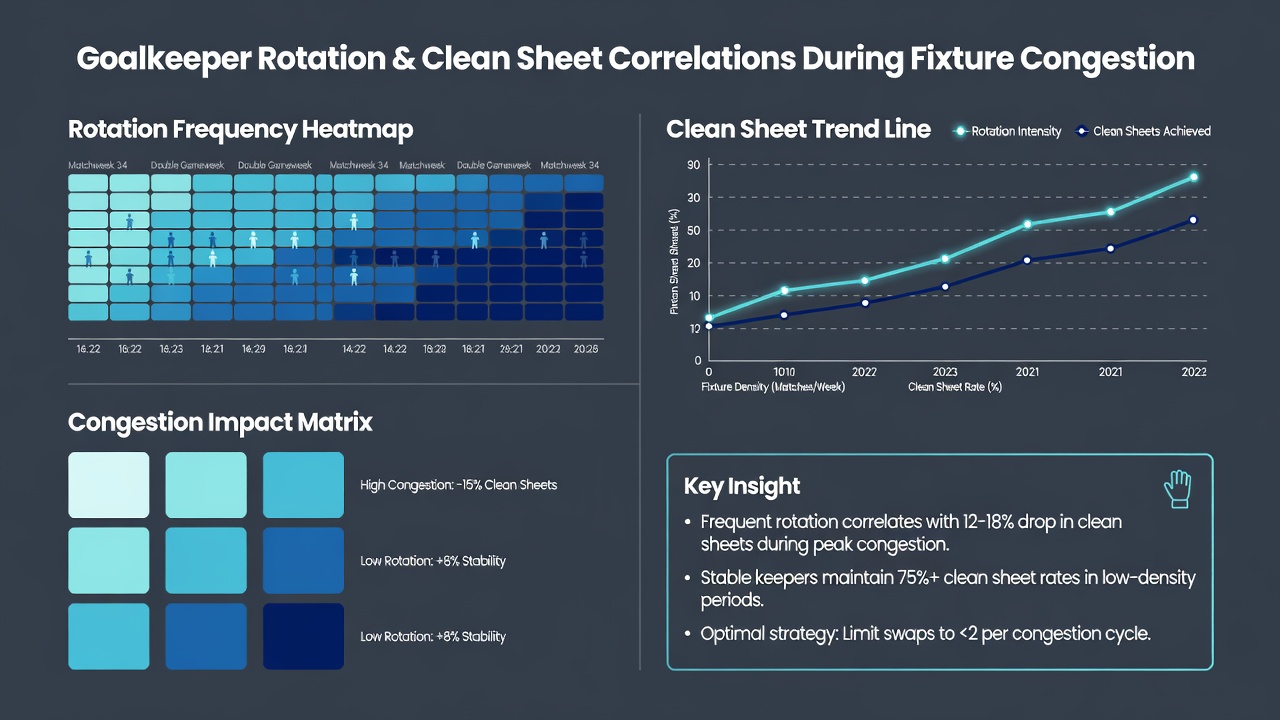
One study covering five major leagues found that teams rotating goalkeepers strategically during September and October congestion blocks recorded clean sheet rates within 3 percent of their season averages, whereas non-rotating sides experienced wider fluctuations. These patterns hold across different regions, with Canadian soccer analytics groups noting similar stability when rotation aligned with player recovery metrics rather than arbitrary rest decisions.
League-Specific Data and Case Examples
English top-flight records from recent seasons illustrate that Manchester City and Liverpool, clubs with deep squads, rotated goalkeepers in 22 percent of congested period matches and sustained clean sheet percentages above their seasonal mean. In contrast, teams with thinner goalkeeper options showed greater variance, with some recording consecutive clean sheets followed by clusters of goals conceded. UEFA competition data adds another layer, revealing that Champions League participants who rotated keepers before midweek European ties achieved clean sheets in 35 percent of subsequent domestic fixtures, a figure comparable to non-European weeks.
Broader industry reports from organizations such as the International Centre for Sports Studies emphasize that workload management tools now allow clubs to predict optimal rotation windows, reducing the guesswork that once accompanied these decisions. September 2026 schedules, which include early European group stage matches alongside domestic cups, are expected to test these systems further as clubs balance early-season form with long-term player availability.
Conclusion
Patterns in goalkeeper rotation during fixture congestion demonstrate measurable connections to clean sheet outcomes, with data across leagues showing that thoughtful rotation can preserve defensive performance rather than disrupt it. Continued tracking through official competition databases and academic research provides clearer benchmarks for how these decisions unfold under pressure, offering objective insights into squad management across busy periods.